
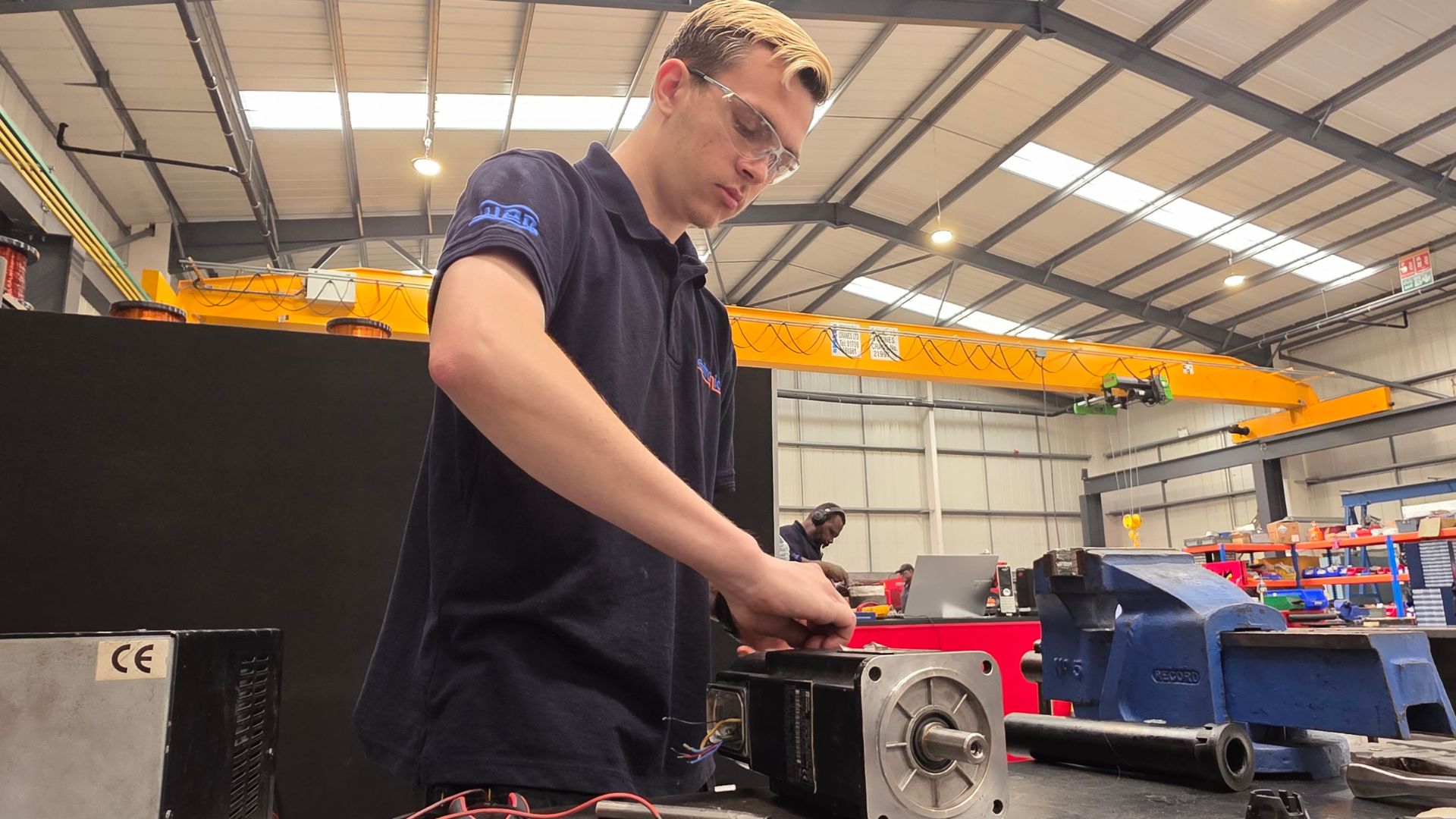
Electric Motors
Servo Motor Repair Servo systems serve as the silent backbone of modern manufacturing. Specifically, from precision robotics and CNC machinery
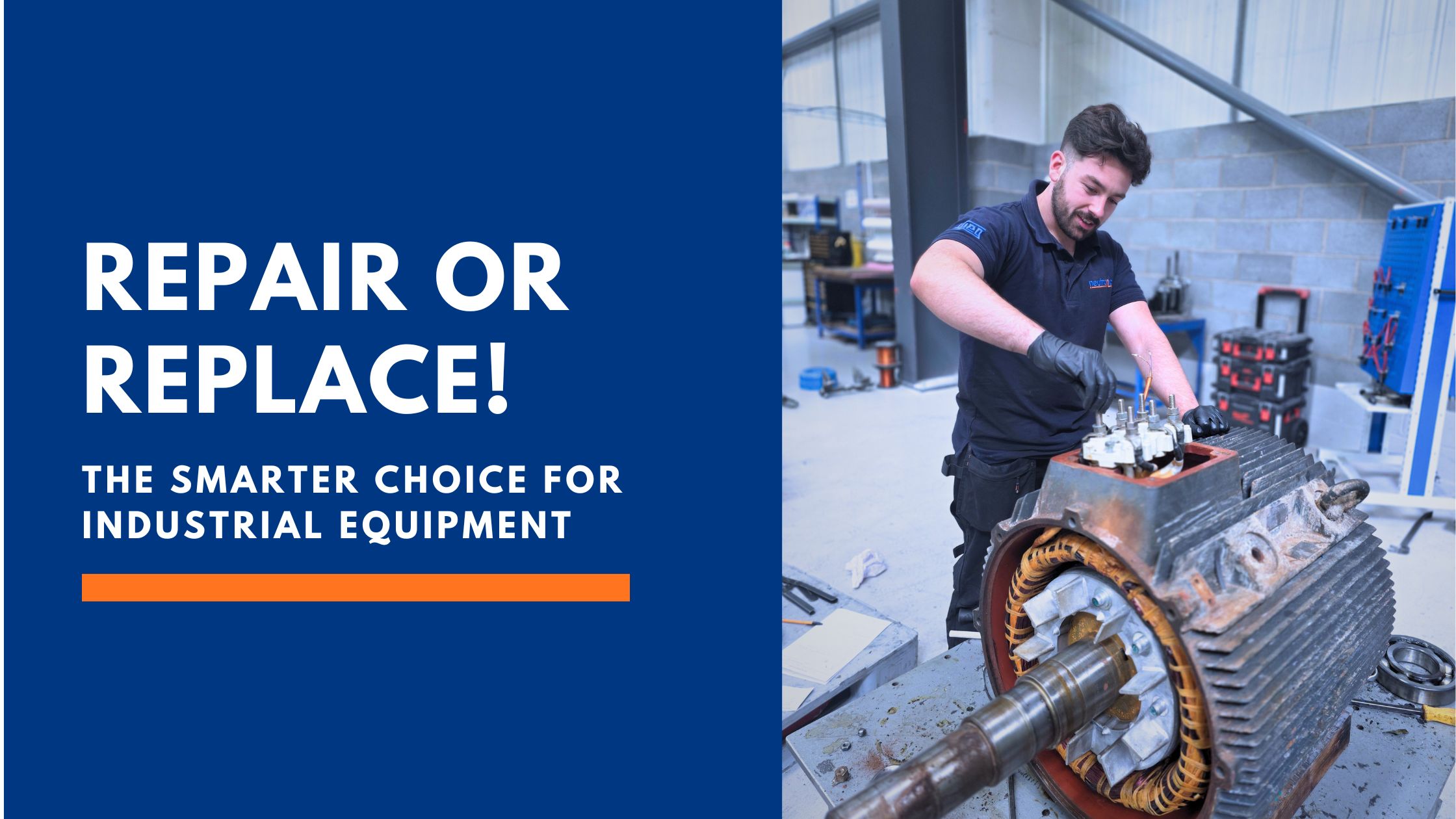
Industrial equipment is a major investment for any business. Motors, gearboxes, drives, pumps, and control systems are expected to run reliably, often in demanding environments and under continuous load. When a fault occurs, the same question always comes up: should the equipment be repaired or replaced?
For many organisations, replacement feels like the safest option. New equipment sounds reliable and future-proof. However, in reality, replacement is often expensive, slow, and unnecessary. In most cases, repair and refurbishment are the smarter, more practical choice.
In this article, we explain why repair is usually the better option for industrial equipment, when replacement may be required, and how expert refurbishment can restore assets to OEM-standard, like-new condition.
Replacing industrial equipment is rarely just about buying a new unit. The true cost goes far beyond the purchase price.
Replacement often includes long lead times, especially for specialist or discontinued equipment. Many manufacturers now quote weeks or even months for delivery. During this time, production may be reduced or stopped completely, leading to lost revenue and operational disruption.
There are also hidden costs. New equipment may require mechanical modifications, electrical changes, software updates, or reconfiguration of control systems. Installation and commissioning take time, and staff may need training to operate new systems safely and efficiently.
In addition, replacement increases environmental impact. Manufacturing new equipment consumes raw materials, energy, and transport resources, all of which contribute to carbon emissions.
Repair and refurbishment focus on restoring the existing equipment rather than discarding it. In most cases, industrial equipment fails due to wear in specific components rather than total system failure. Bearings, seals, windings, gears, and electronic components can be replaced or restored without changing the entire unit.
Repair offers several clear advantages. It is usually faster than sourcing new equipment, which means reduced downtime. It is also significantly more cost-effective, helping businesses control maintenance budgets while keeping assets in service for longer.
Most importantly, a professionally repaired and refurbished unit can perform just as reliably as a new one when restored to OEM standards.
Repair is the preferred option when the core structure of the equipment is sound. This includes motors with healthy frames, gearboxes with intact casings, and electronic units where faults are isolated to specific components.
It is also the best option when dealing with older or discontinued equipment. Many industrial systems are built around legacy assets that are no longer manufactured. Replacing them often requires major system redesign, which is costly and disruptive.
Repair is especially effective when faults are detected early. Minor issues such as bearing wear, insulation breakdown, oil contamination, or electronic component failure can be addressed before they cause further damage.
Not all repairs are the same. A professional refurbishment goes far beyond a basic fix. At Neutronic Technologies, refurbishment follows a structured engineering process designed to restore equipment to OEM-standard condition.
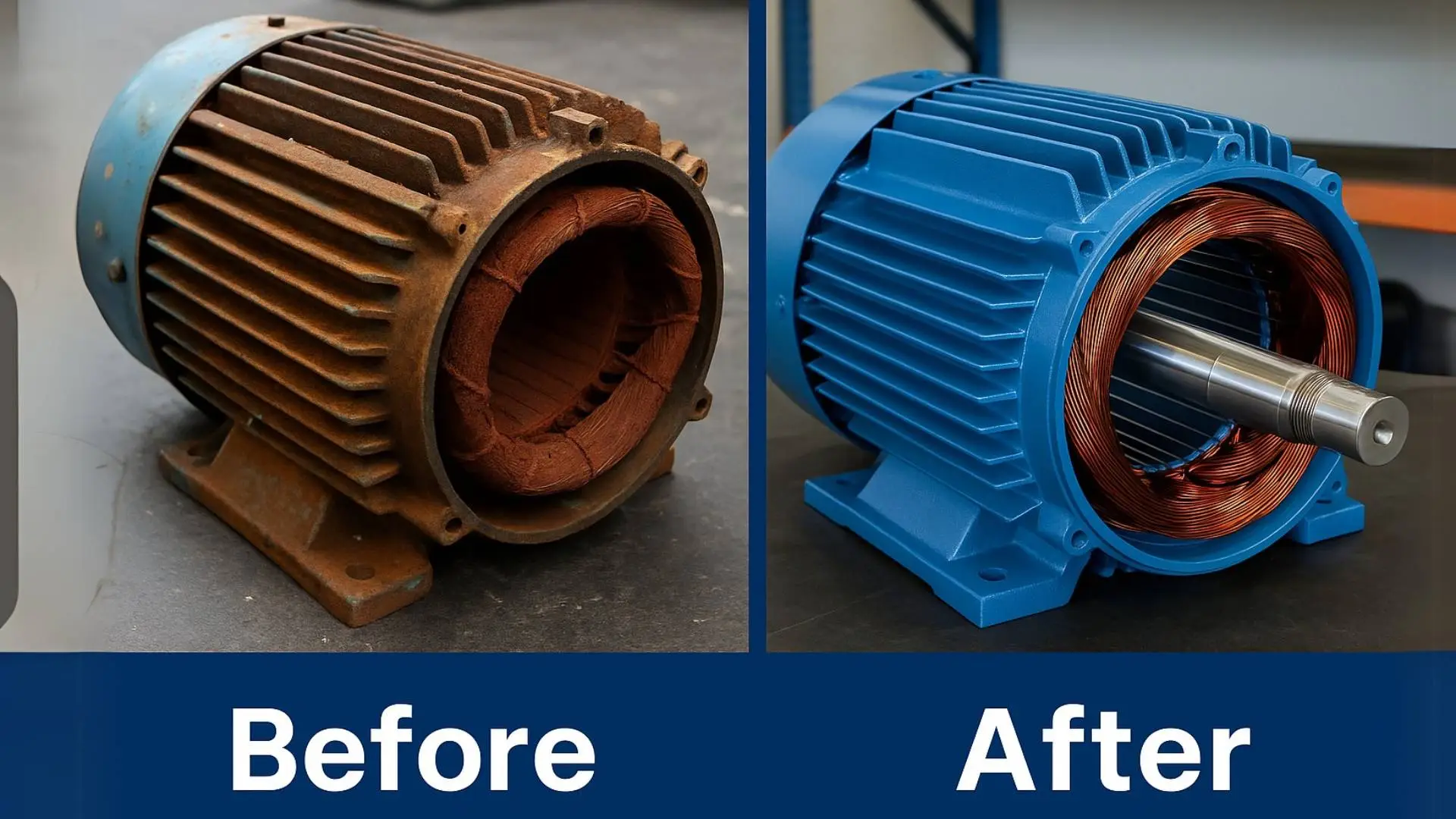
This process typically begins with a full inspection and diagnosis. Equipment is dismantled, cleaned, and examined using precision tools. Worn or damaged components are identified and replaced with high-quality parts that meet or exceed original specifications.
Mechanical components are reassembled with accurate alignment and correct tolerances. Electrical and electronic systems are tested, repaired, and calibrated. Lubrication systems are renewed, seals and bearings are replaced, and performance-critical elements are restored.
Before returning to service, refurbished equipment is fully tested under controlled conditions. This ensures reliability, safety, and performance that matches new equipment standards.
Repair usually focuses on fixing a specific fault. This could be replacing a bearing, repairing a winding, or fixing a failed electronic component. It is often the quickest solution when the fault is localised.
Rebuilding is more extensive. It involves replacing multiple internal components and addressing wear across the system. This approach is common when equipment has seen long service life or heavy use.
Refurbishment is the most comprehensive option. It restores the equipment fully, often improving reliability beyond its original condition. This is ideal for critical assets where long-term performance is essential.
In many cases, refurbishment provides the best balance between cost, performance, and longevity.
A common concern is whether repaired equipment can match the reliability of new units. When refurbishment is carried out correctly, the answer is yes.
Modern repair techniques, improved materials, and advanced testing methods allow refurbished equipment to meet or exceed OEM performance levels. In some cases, upgraded components improve durability compared to the original design.
Because the equipment is already proven within the operating environment, there is also less risk of compatibility issues. The repaired unit fits back into the system without the need for redesign or reprogramming.
Repairing instead of replacing supports a more sustainable approach to industrial maintenance. Extending the life of equipment reduces waste, lowers demand for raw materials, and cuts carbon emissions linked to manufacturing and transport.
Many organisations now have sustainability targets and environmental reporting requirements. Choosing repair over replacement directly supports these goals while maintaining operational efficiency.
Refurbishment aligns with the principles of a circular economy, where assets are reused, restored, and kept in service for as long as possible.
Although repair is usually the smarter choice, replacement may sometimes be necessary. This is typically the case when the equipment casing or frame is severely damaged, when safety can no longer be guaranteed, or when the asset no longer meets the operational demands of the process.
Replacement may also be required when repair costs exceed the long-term value of the equipment. However, this decision should always be based on a professional assessment rather than assumption.
An experienced repair partner can provide clear guidance on whether repair or replacement offers the best return on investment.
Choosing between repair and replacement should never be a rushed decision. It requires a clear understanding of the fault, the condition of the equipment, operational priorities, and long-term costs.
Professional inspection and honest technical advice are key. With the right information, many businesses discover that repair is not only possible but clearly the better option.
At Neutronic Technologies, our approach is simple: repair where possible, replace only when necessary. Our engineers work with a wide range of industrial equipment across multiple sectors, delivering high-quality repair, rebuild, and refurbishment services.
We restore equipment to OEM standards, reduce downtime, and help our clients maximise the value of their assets. Every repaired unit is thoroughly tested and documented before returning to service, giving confidence in long-term performance.
By choosing repair, businesses gain reliability, cost control, and sustainability without compromise.
When industrial equipment fails, replacement is not always the best solution. In most cases, repair or refurbishment is the smarter choice. It is faster, more cost-effective, environmentally responsible, and capable of delivering like-new performance when carried out by experienced engineers.
Before committing to replacement, consider a professional assessment. Repairing your existing equipment may save time, money, and unnecessary disruption — while keeping your operations running smoothly.
If you are facing an equipment failure or planning preventative maintenance, the team at Neutronic Technologies is ready to help.
Servo Motor Repair Servo systems serve as the silent backbone of modern manufacturing. Specifically, from precision robotics and CNC machinery
Proven Benefits of Preventative Maintenance in Industrial Automation
The Undeniable Value of Preventative Maintenance in Industrial Automation In today’s fast-paced industrial landscape, automation systems are the backbone of